I was recently featured in a CBC bit about the gun confiscation program with a . . .less than charitable framing of a clip. Reading a recent error-laden CTV article and seeing the government rapid-fire lies one after the other when they recently spoke on the Assault-Style Firearms Compensation Program (ASFCP) drove me to write this article.
Lie 1: The government has targeted 136,000 guns with this buyback. That’s what the government estimates there are in circulation.

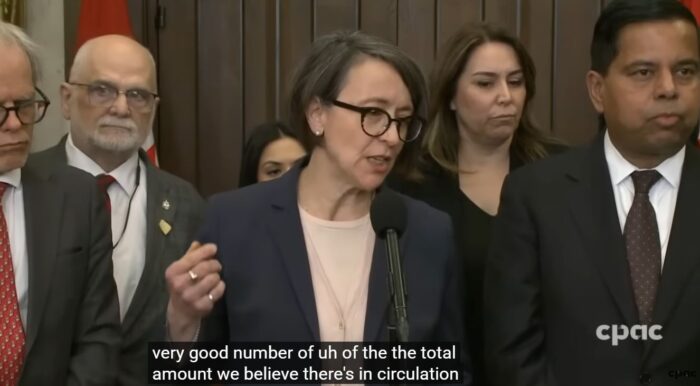
Is it a lie? Depends who is saying it. Nathalie Provost recently said “1/3 is still a very good number of the total amount there is in circulation”. That’s a clear lie. We don’t know exactly how many affected guns there are but industry estimates are 1-3 million guns affected by this ban so the government always intended to short-change legal gun owners. When news outlets are saying the gov will “miss the mark” because they’re only getting 67k/136k, they’re neglecting that it’s actually way worse at 67k/2M. Others from the government have been using the 136,000 number as a target to mislead and reframe but it’s important to remember that this is not how many guns are out there, it’s just what the government budgeted for.
Lie 2: The government enacted the ban because of the NS Portapique shooting.
Is it a lie? Yes, in 2 ways.
- Intent: They want you to believe they enacted the laws because of the shooting. These laws were already queued up for release and promised as a part of the LPC election platform, the timing of the attack was just used for convenience and maximum publicity. The real reason (leaked behind closed doors) that the Liberal Party enacted these laws is because they needed more votes in urban Quebec.
- Omission: They want you to believe that the law would have stopped the NS shooter. They don’t mention that the NS shooter didn’t have a gun license and illegally smuggled in at least one of the firearms used. The new law would not have stopped or hindered the shooter at all. What would have stopped it? Basic police work: multiple people had reported to police that Wortman had illegally owned firearms. Following up on those tips could have resulted in charges that could have stopped Wortman.
There’s a gap between the problem (Wortman bringing in illegal guns from the US, plus failure to enforce current laws) and the solution: targeting legal gun owners.
Lie 3: “These are firearms designed for war”, Gary Anandasangaree.

Is it a lie? The government tried to give these to Ukraine and they outright refused as the firearms are not appropriate for war. The gov said that’s because the guns didn’t meet “Nato compliance standards” but Ukraine is not part of Nato and doesn’t generally use Nato-standard firearms so that doesn’t seem to make sense. A GSG16 is a mostly plastic 22LR rifle suitable for youth users. Is that newly-prohibited rifle “designed for war”? See “lie 5” for more discussion on the “designed for” argument.
Lie 4: This program will save lives.
Is it a lie? Few are directly answering. Listen to how researchers and academics are quoted on this one because they’re not answering the question above. Instead, they give more broad answers like “removing firearms so that people don’t have access can reduce injuries or death”. But again, that’s not what we’re doing here: we’re removing some firearms from people who most likely own several. You can see this in the early numbers of declarations – 27,000 people declared 57,000 guns. Separately, police and provinces have refused to participate because they claim it’s a waste of resources.
Lie 5: “These firearms are designed to kill the most amount of people in the shortest amount of time”, Justin Trudeau. “These firearms are designed to kill”, Nathalie Provost.
Is it a lie? Justin Trudeau and Nathalie Provost don’t know anything about the designers intention for each of the firearms affected in the ban and they don’t get to act as representatives of gun designers intent. Most of the firearms in the ban are not military firearms. My AR15, which was affected by the ban, was built from the ground-up by me as a competition rifle. As the designer of that firearm build, I can tell you that I did not build it to kill the most amount of people in the shortest period of time. My kid’s GSG16 is not “designed to kill the most amount of people in the shortest amount of time”.
Lie 6: “We are not removing hunting guns”, Nathalie Provost.
Is it a lie? Many of the firearms were used for hunting. The GSG16 that my son used for hunting small game was banned. I have friends who used their WK180 and Stag10’s for hunting and those guns are now banned.
Lie 7: We’re only banning 2,500 models of firearms, there are still 19,000 models on the market still left to use for hunting and sport shooting.

Is it a lie? That number of firearms includes ALL FIREARMS EVER MADE. There are not 19,000 guns “on the market” since it’s a number from Canada’s FRT database that includes information on all firearms. A great majority of those firearms are no longer in production and haven’t been for decades. It also includes prototype models that only had 1 ever made. You can’t say there are 19,000 models on the market because that’s not close to what’s actually available to purchase.
Lie 8: “This is taking assault style weapons off the street”
Is it a lie? The program is only for legal gun owners, so you can’t say you’re taking guns “off the street” because that suggests these guns are illegally owned or are being used by criminals.
Finally a truth:
“I don’t feel I am a gopher or a duck or a pop can“, Nathalie Provost. About the only thing she’s said that’s 100% true!
Pictures & video used to portray the gun ban
This is one that I think the media is readily complicit in. Out of laziness, ignorance, or just wanting to show stuff that they think will gets clicks, they regularly use images and video of the wrong firearms.
As an example, the images used towards the bottom of this CTV article from yesterday show guns that have a bump stock. This accessory is illegal in Canada and always has been.
I think that visual misrepresentation shapes public perception more than policy does and the sensational visual framing that the media uses is a broad pattern.
Me on CBC
I was on a CBC bit recently. I think they did a good job on most of the piece but they did choose to pull a clip from my YouTube channel where I was shooting full auto firearms in the US and stuck it right next to a clip of me showing an affected firearm (a GSG16). Any regular person seeing that portion of the video would assume that my GSG16 is a full auto centerfire and that’s what the government was banning. A clearly misleading editing choice.
Thankfully, enough viewers wrote in to CBC to complain about the bit and they removed the misleading portion and republished.
Just so we’re clear: I did not give the CBC that clip of me shooting full autos in the US. Fair use dictates that media can use short clips of other people’s videos. There was a lot more interview (they were at my house for a few hours) and I would have liked for them to include some parts (like that the GSG16 was my son’s for hunting) but legacy media has time constraints and has to keep things short and punchy. Excluding that clip, I still think this is one of the best segments that CBC has put out on this topic.
Here’s what CBC put on the radio (I think they did a good job of it): https://www.cbc.ca/listen/live-radio/1-17-edmonton-am/clip/16205683-gun-buyback-deadline-approaching
And here’s the edited and re-uploaded video:
Overall
You don’t need to lie about good policy but bad policy needs a lot of lies to make it palatable. This gun ban and buyback was always about votes in key areas and not about public safety.